
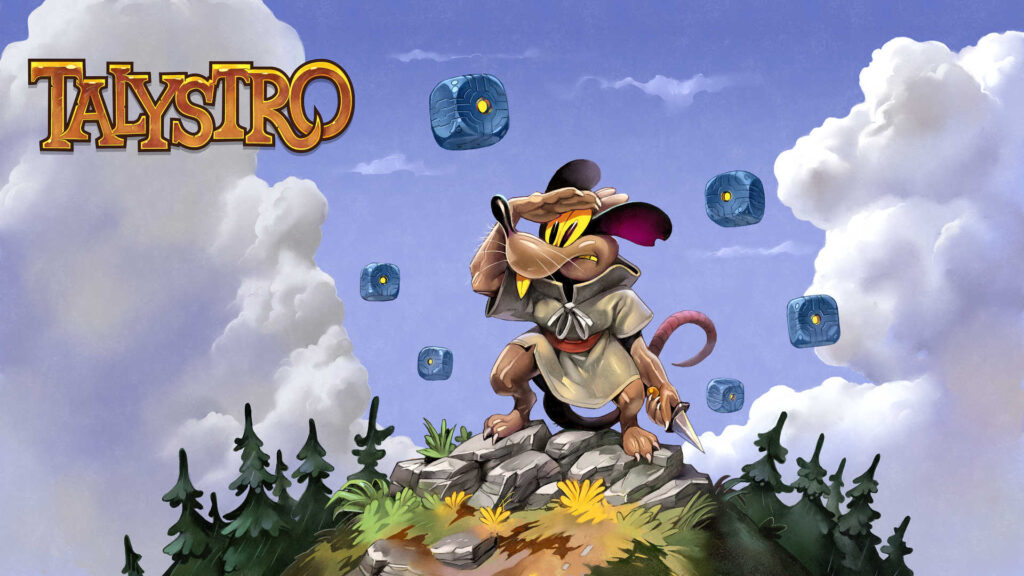
Though we should be rolling our eyes at yet another roguelike deckbuilding game which takes more than a few cues from the likes of Slay the Spire and Balatro, it genuinely impresses me how inventive Talystro feels, with its mechanics based around mathematical equations. Let’s check it out!
What Is Talystro?
If you’ve played any number of roguelike deckbuilding games, you’ll be right at home with Talystro. At least, you will with its general structure; the mechanics of its combat encounters, however, should be pretty fresh.
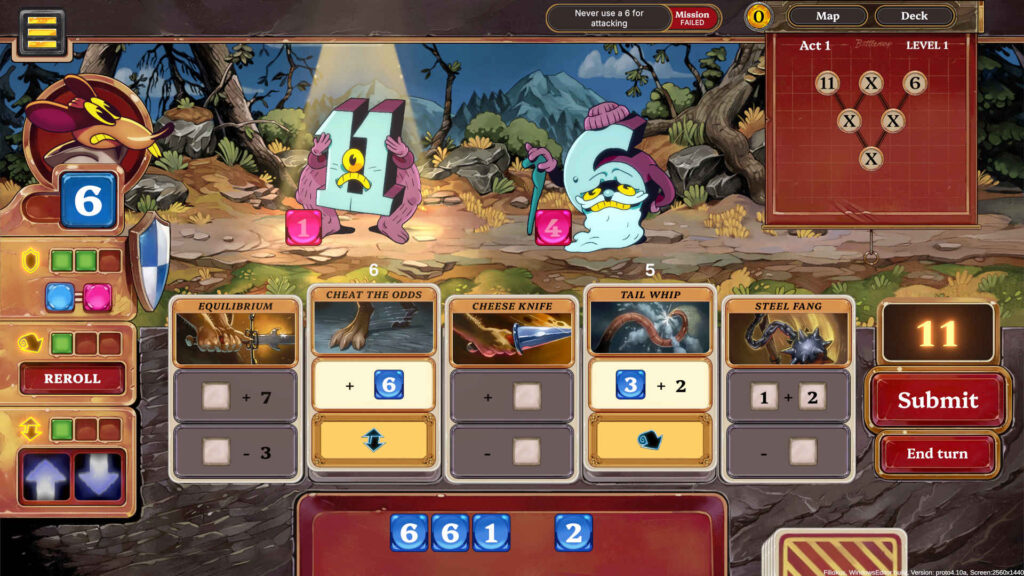
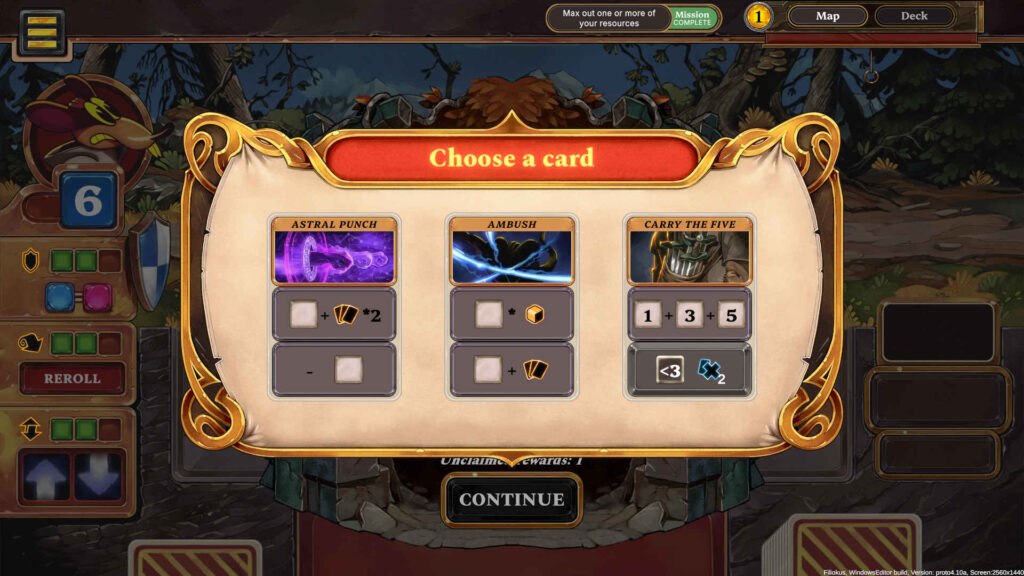
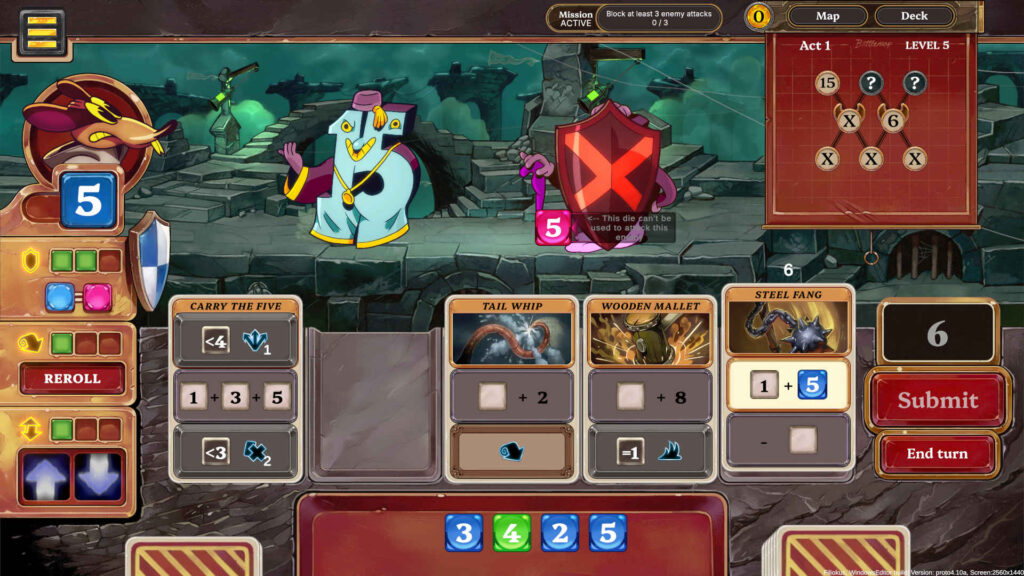
That’s because you’ll use a combination of cards and dice to complete sums and generate specific numbers to attack your enemies, who take the form of aggressive-looking, anthropomorphic numerals. Match the enemy’s number with the result of your sum, and you’ll be able to deal damage to them. Sounds simple, right?
Is Talystro Fun to Play?
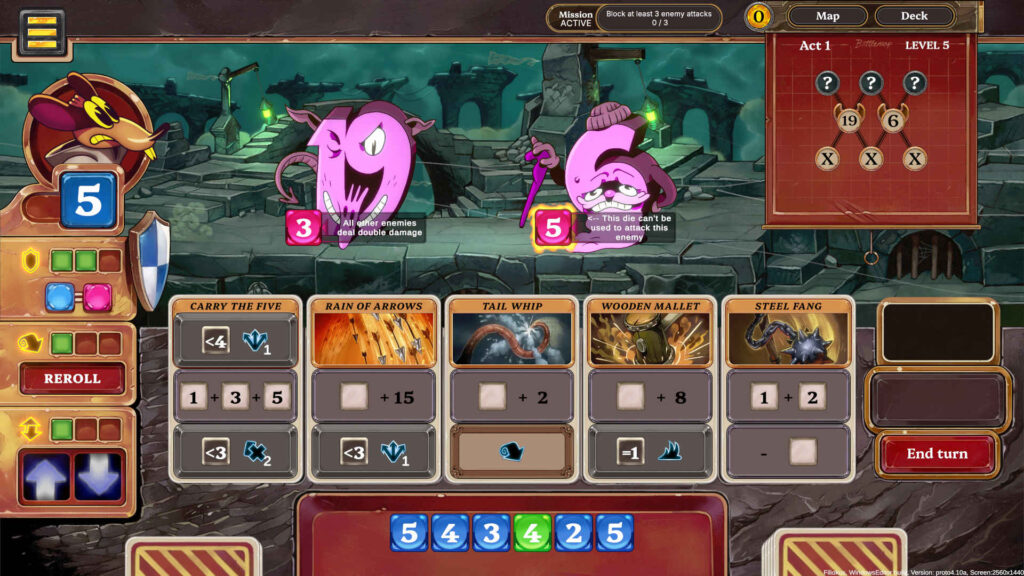
Add in different types of mathematical symbols, multiple sums per card, various bonuses on cards and even boss encounters, and it’s not quite as straightforward as it seems. That’s not to say it’s overly complex; Talystro does a great job of showing you the ropes and giving you everything you need to succeed in its comprehensive tutorial stages.
The overall aesthetic of Talystro is superb, with all of the game’s characters being beautifully animated and having a very old school, classic animation style. The main character seems almost like a noir-style Mickey Mouse, and the enemies have a colorful, often sinister look to them which is really impressive. There’s a satisfying clunkiness to the roll of the dice, as well as adding them to slots or shifting things around, giving the game an audio design which makes it feel very tactile.
That said, right now the music is somewhat lacking (as in, during combat it seems to be missing entirely), but as this is only an early version of Talystro, we’re certain that this aspect will be improved by the time the game is fully released. It does mean that there’s a bit of a lack of atmosphere; the action certainly doesn’t feel as dramatic as the cardplay in, for example, Slay the Spire or Monster Train just yet.
The gameplay itself is really solid though, and with the dice-and-math-based mechanics, Talystro feels set apart even to fellow dice-based roguelikes such as Dicey Dungeons, with an almost puzzle-esque feel to each round.
The Card Gamer Verdict
Though we’d usually have a final summary with a score here, due to Talystro’s current version being a playtest, it wouldn’t be right to place numbers here. Even though, of course, we’ve been doing plenty of number crunching in Talystro itself! Though not yet fully featured, there’s a really strong framework in place for Talystro even at this early stage, and we’re definitely looking forward to seeing the last layers being applied to this mathematical marvel, as its full release status is reached.
You can request to be added to the playtest for Talystro on Steam, and even though its final release date is still to be announced, you can add it to your wishlist using the button below:
Want to check out other unique roguelike deckbuilding games? Take a look at our reviews of Birdigo and Into the Restless Ruins!