
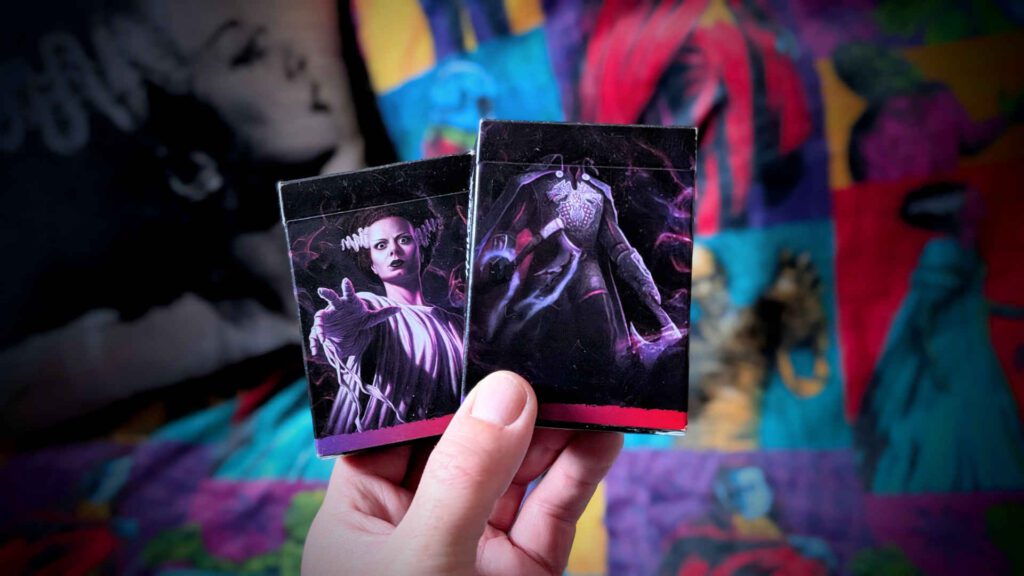
Recently, we were fortunate enough to get a hands-on demonstration of upcoming horror-themed TCG, Hellbreak. We’ve even got our blood-covered hands on two demo decks (pictured above), featuring the Bride of Frankenstein and Sleepy Hollow’s Headless Horseman as the main Monsters. Let’s find out what we learned, and why we’re even more excited than ever to sink our teeth into Hellbreak!
Horror Comes to the Tabletop
It’s hardly the first time that a horror-themed card game, or even TCG, has arrived to haunt tabletops the world over. One of the most enduring, strongest designs we’ve ever seen is Arkham Horror: The Card Game, a Living Card Game which tasks players with investigating all manner of cosmic horrors.

Even darker still is the short-lived, innovative Hecatomb, shown above. There are many more examples, of course, but Hellbreak’s more mature tone still strikes us as unique, with games such as Disney’s bright and family-friendly Lorcana, or the equally all-ages experience of Star Wars Unlimited having carved themselves such big pieces of the TCG sector in recent years.
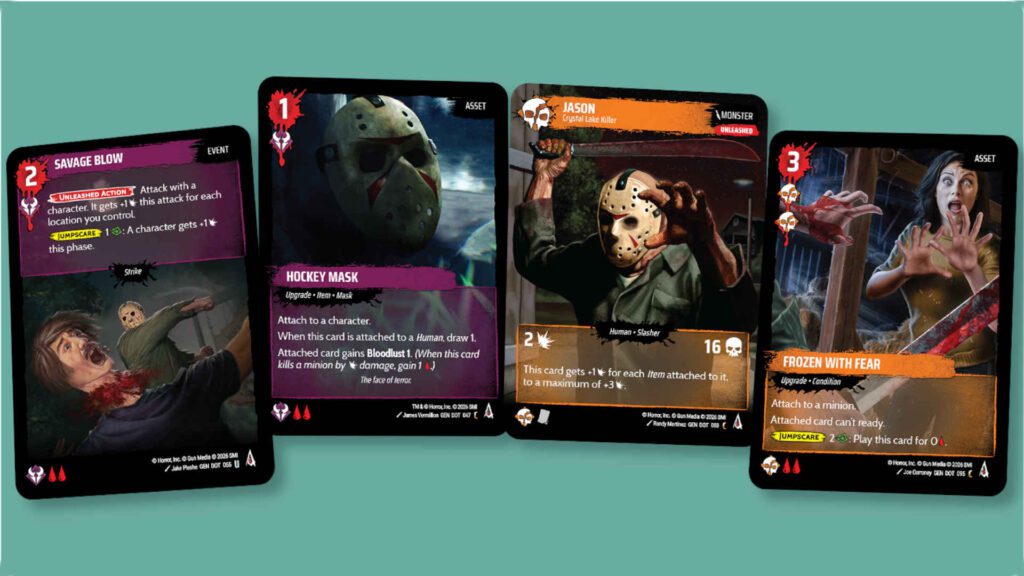
The gore on some cards, particularly when it comes to cards related to iconic movie slasher, Jason Voorhees, marks Hellbreak as a game which isn’t afraid to skew towards a more mature audience.
A Wealth of Franchises to Draw From
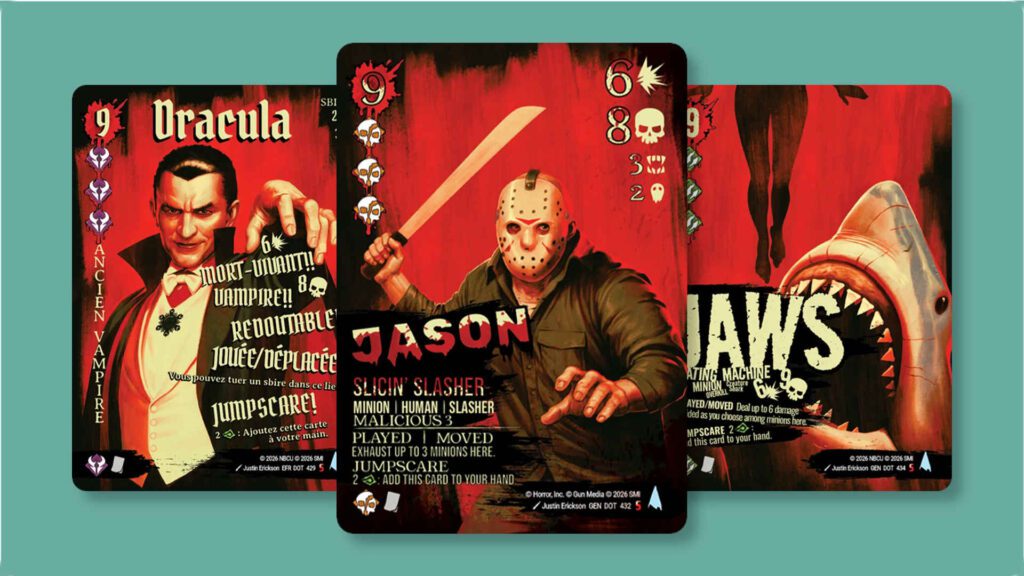
Though initial reveals gave us glimpses at Universal’s stable of characters, including the timeless Universal Monsters and the legendary Jaws, we’ve since seen many other franchises added to the game.
The aforementioned Jason Voorhees of Friday the 13th, for example, but we’ve now also seen Sleepy Hollow, A Quiet Place and Smile added to the roster of settings and characters in Hellbreak. With the expanding number of movie studios signing up to have their characters featured in Hellbreak, such as Blumhouse, AMC and Lionsgate. Paramount Pictures were also on board, prior to their acquisition and rebranding to Skydance; theoretically, that acquisition could mean even more characters becoming available for Hellbreak to use.
We’ve been assured that more Universal Monsters are on the way, but also that we can see many more exciting characters in Hellbreak, beyond the game’s initial set, Dawn of Terror.
The Unique, Exciting Mechanics of Hellbreak
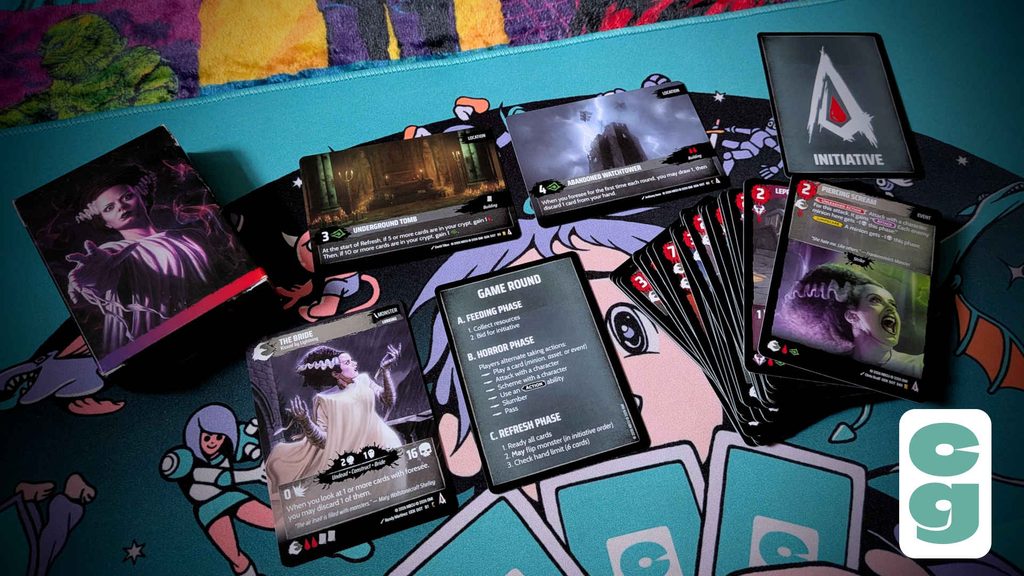
It’s usually hard not to feel like you’ve seen it all before when it comes to the launch of a new TCG. It’s easy to recognize elements lifted from different sources, and even something as simple as finding ways to deal with resources, to pay to bring cards into play, seems to be something that has only a little variation between games.
Both Magic: The Gathering and Pokémon require the old school method of drawing resource cards into your hand, whereas games such as Lorcana and Star Wars Unlimited allow you to use almost any card, face down, as a resource. Even Riftbound features a resource system that’s reminiscent of the one found in One Piece, with a separate resource deck that you draw from each turn.
Having a specific character or “Leader” to head up your deck and build your strategy around is becoming more popular, likely thanks to the popularity of the Commander format in Magic: The Gathering. Games such as Star Wars Unlimited, One Piece and a number of other Bandai games use this system.
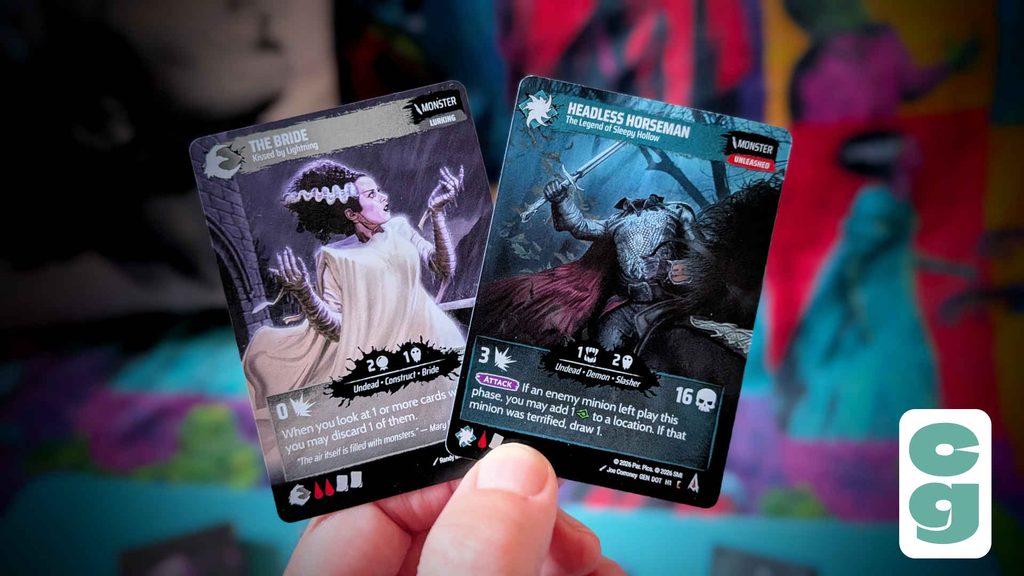
Hellbreak uses the “Leader” card mechanic, but does so in a unique way. Monster cards in Hellbreak are double-sided, as Leaders are in Star Wars Unlimited. They have a Lurking and an Unleashed side; Lurking helps gather resources more effectively, while Unleashed is for pushing forward with attacks.
Back to resources, this is one of the elements of Hellbreak that we are incredibly excited about. Each card in your deck has a resource bar at the bottom. When you start your game, your Monster card is the only card which generates resources for you using this bar. As you bid for initiative over subsequent turns, you’ll add more cards underneath your Monster to create the Vault.
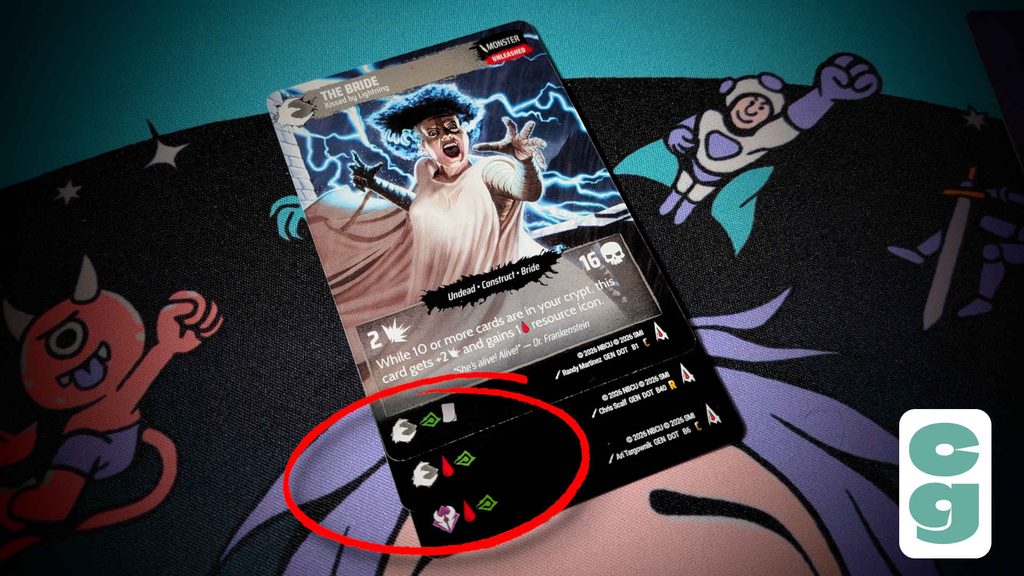
This means that your resources can rapidly grow in number as you progress through a game of Hellbreak. This is an element which doesn’t feel recycled from another game in any way, and it’s a very clever, hugely satisfying way to handle the age-old problem of resources.
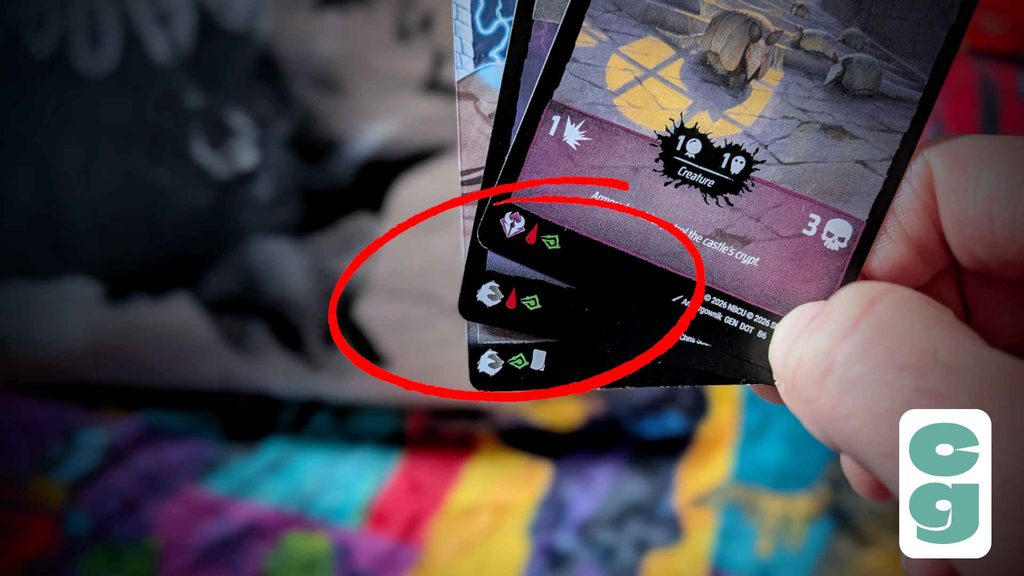
On the same topic, Hellbreak also features multiple resource types. Blood is used to pay to get cards to the table, but you’ll also need to ensure that you have enough, specific aspect symbols in your Vault to pay for cards too. Malice tokens are another resource type, used to ready cards and establish dominance at Locations. We’ve seen Locations in other games too, of course. They’re a central feature of Riftbound, for example, but we also have them in games such as Lorcana.
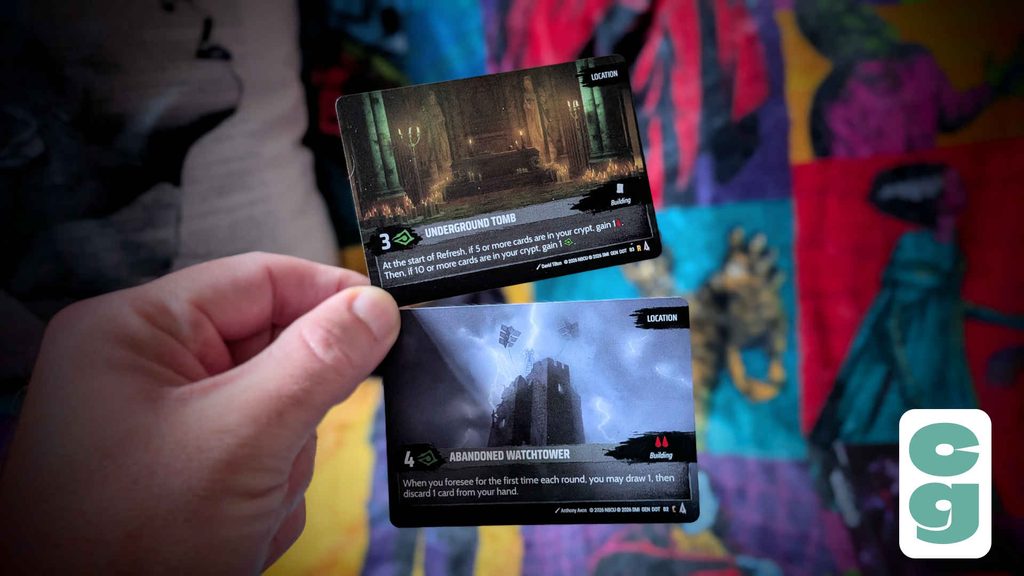
The battle for dominance of Locations in Hellbreak is more reminiscent of the way they work in Riftbound, but with their own unique spin, as well as the fact that Monsters can both attack, and be attacked, through each Location.
The Health Stack is another interesting element. Though we have broadly similar mechanics in Pokémon’s Prize Cards, or One Piece’s Life cards, Hellbreak hides thematically appropriate Jumpscares in its Health Stack! Whenever your Monster loses a second point of Health, the card on the stack is revealed before it’s discarded; if it has a Jumpscare ability, this is carried out before the card is gone.
Special Card Rarities
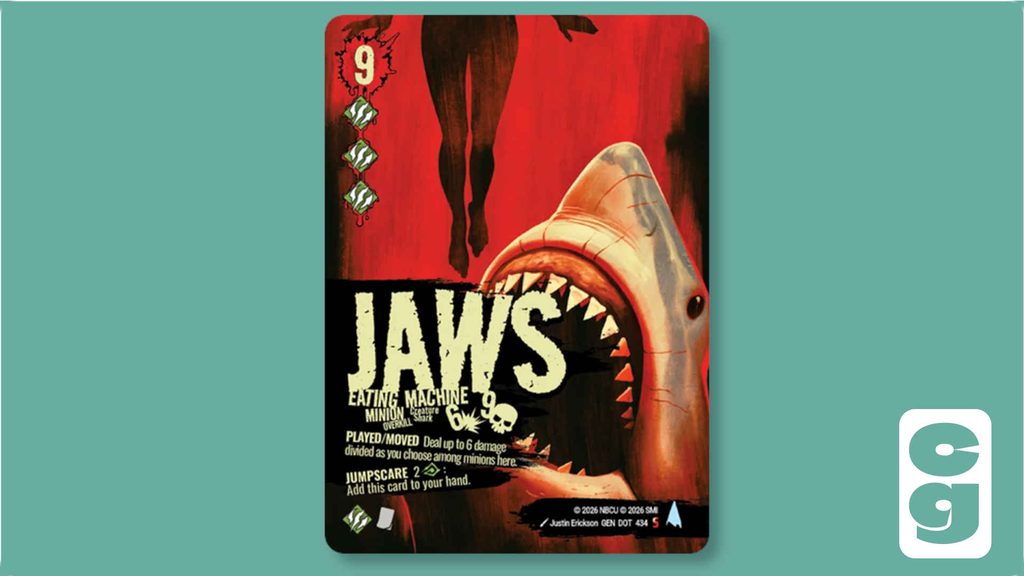
Of course, all TCGs have their chase, variant cards which appeal to collectors. Hellbreak is no different in that regard, and features many different types of cards. In addition to borderless and foil treated, textured cards, there’s a classic movie poster-inspired card rarity known as Demented. There’s an example of one a Demented card in the above image!
When Will Hellbreak Be Released?
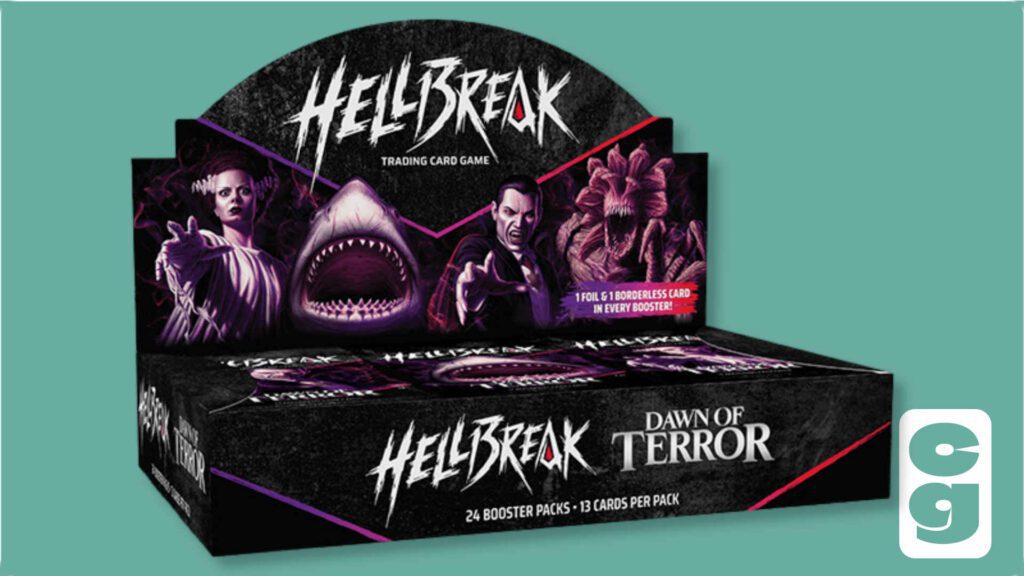
You’ll be able to get your hands on Hellbreak’s first set, Dawn of Terror, in January 2027. You can check out our other articles to find out more about Hellbreak, such as our guide to Hellbreak card rarities, or our look at Hellbreak’s excellent accessories.