
If you’re new to the Pokémon Trading Card Game, or even if you have learned how to play already, you may not know what every element on a Pokémon card is there for. Which is completely understandable, and totally fine! Some parts of a Pokémon card aren’t there for gameplay purposes, whereas other elements are crucial to understand in order to play the game. So let’s take a look at the breakdown of a Pokémon card, and let you know what every individual aspect of the card means!
Pokémon Card Breakdown
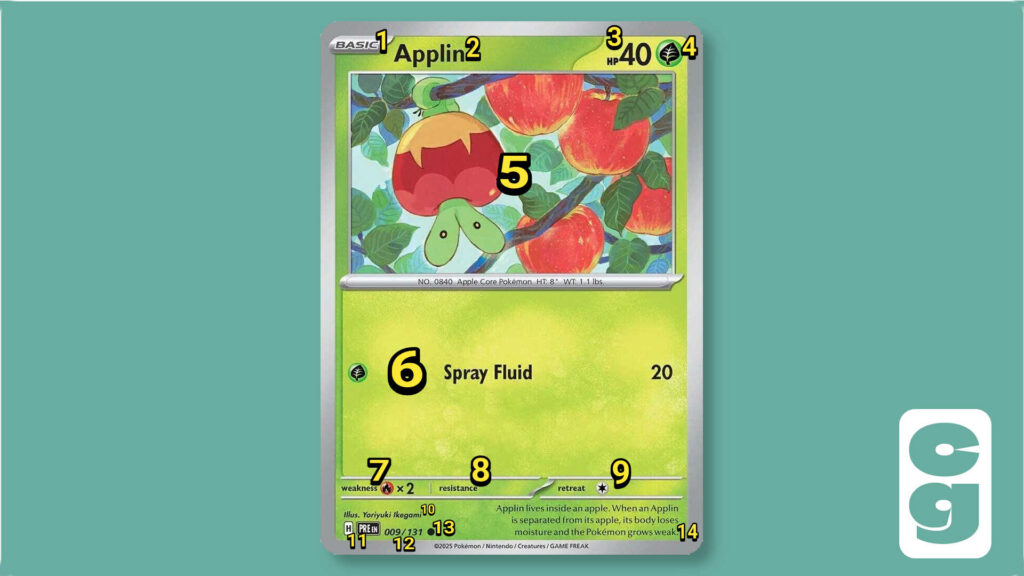
In the below image, we have a Basic Applin Pokémon card, with each element numbered from 1-14 with yellow numerals, as you can see:
Here’s what each of those card details are:
- Card Type: The word Basic here shows what type of Pokémon the card is; if it instead says Stage 1, that must be played on top of a Basic Pokémon to evolve it. The same is true of a Stage 2 Pokémon, which must be played on top of a Stage 1 Pokémon to evolve it. For a clearer and more in-depth explanation, check out our guide to evolving Pokémon.
- Card Name: This is the name of the Pokémon; in this example, it’s Applin.
- HP: This element is the Pokémon’s health; in Applin’s case, it begins with 40 HP.
- Energy Type: The Pokémon’s type is here; Applin is a Grass type Pokémon. You can read more about this in our guide to Pokémon Energy types.
- Illustration: The card’s artwork is here, and below the art are facts about the Pokémon, including its Pokédex number, its description (Applin is an ‘Apple Core Pokémon), along with its height and weight.
- Attacks: This area shows the Pokémon’s abilities and attacks. Applin has one attack, named Spray Fluid, which costs 1 Grass Energy to use and deals 20 HP of damage.
- Weakness: Most Pokémon types have a weakness to other Pokémon types; Applin, being a Grass Pokémon, has a weakness to Fire type Pokémon. That means that, if Applin is attacked by a Fire type Pokémon, double damage will be dealt to Applin. If Applin were to attack a Pokémon which has a weakness to Grass type Pokémon with Spray Fluid, it would deal 40 HP damage instead of 20.
- Resistance: Some Pokémon have a resistance to certain types; Applin doesn’t, as there’s no symbol in this section. However, when an Energy type symbol is shown here, it means that any damage dealt to the Pokémon is reduced by 30 HP.
- Retreat Cost: There’s numerous reasons why you’d want to move your Pokémon from the Active Spot to your Bench, and the retreat cost shows how many Energy cards, and which type, you need to discard from the Pokémon in order to do this. In the example of Applin, it costs 1 Colorless Energy (which means 1 Energy of any type) to move it from the Active Spot to the Bench.
- Artist Credit: The artist responsible for the card’s illustration is credited here.
- Tournament Legality and Set: the H In the white box shows the card’s current tournament legality (we’ve got a more in-depth guide on this here), and the PRE EN shows the set the card is from (PRE is for Prismatic Evolutions, and the EN is for the language the card is printed in, which of course is English). As of April 2026, the letters H, I and J are legal for competitive play.
- Set Number: There are 131 cards in the Prismatic Evolutions set, and Applin is card number 9. Which is why here, you’ll see the number 009/131.
- Card Rarity Symbol: The black circle shows the card rarity; in this case, that means Applin is a Common card. Further information can be found in our guide to Pokémon card rarity.
- Flavor Text: Though it has no bearing on the game, here you’ll find the Pokédex information for the Pokémon shown on the card.
Though some cards, such as cards with full or extended art, or even different types of card, will differ very slightly in their design, these categories can be applied to just about any card, in order to understand how they work in-game.

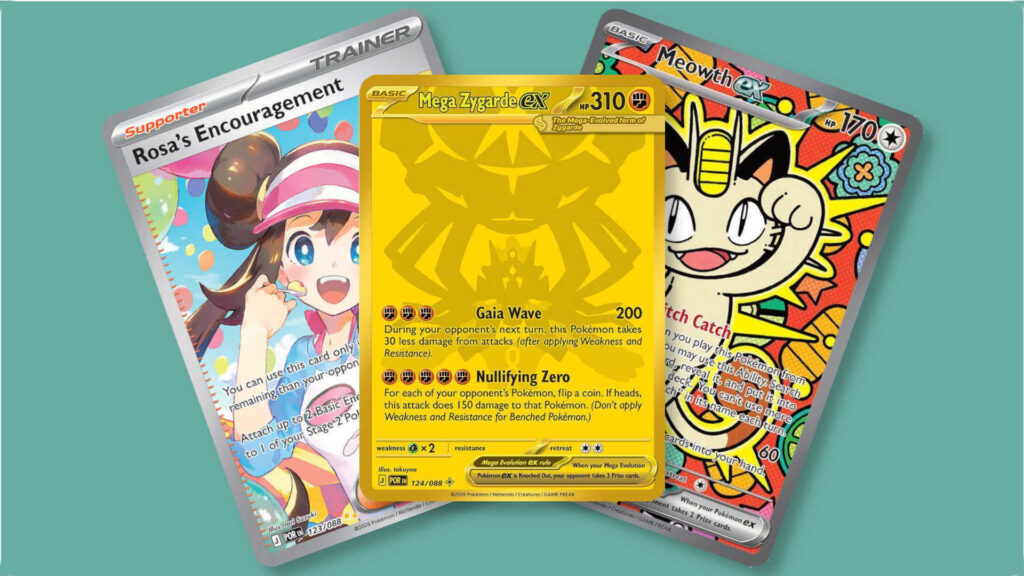
For example, check out the Dawn card shown above. This is a Trainer card, which is different to a Pokémon card, as they usually create one-off effects and are then discarded. So instead of saying Basic, Stage 1, Stage 2 or similar in the top left, these will specify which type of Trainer card they are. In the case of Dawn, it’s a Supporter card. You can see other, familiar elements here such as the set code and card number, as well as the card’s effect text. Additionally, there’s a rules reminder in the bottom left, to let you know that you may play only 1 Supporter card on your turn.
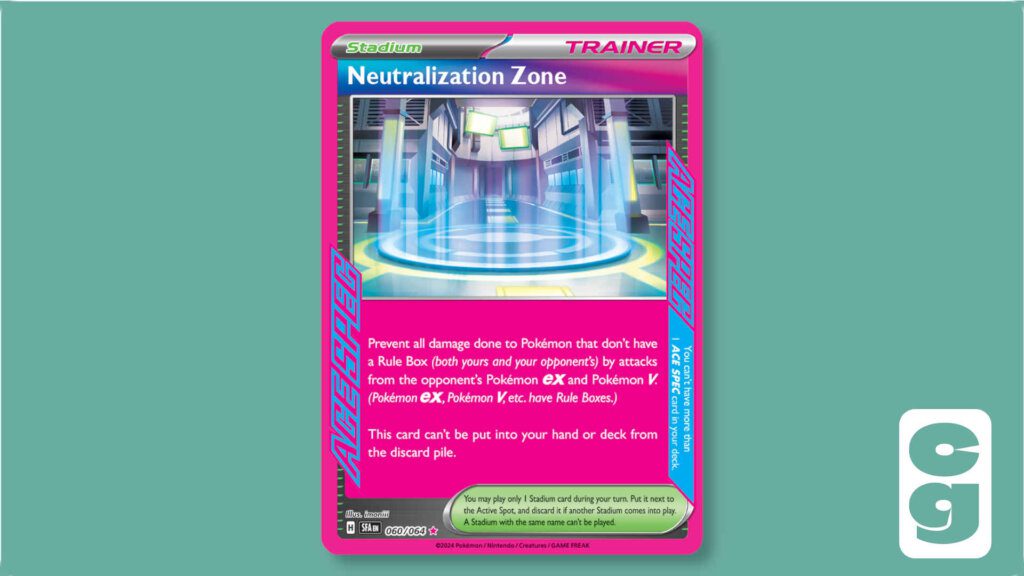
Another type of Trainer card is the Stadium card. We have an example of one of these above; Neutralization Zone is also an Ace Spec card, which is made clear by its bold color and the words “Ace Spec” on each side. Stadium cards have a rule box, just like Supporters; this tells you that Stadium cards are placed in play, and remain there until removed by a card effect, or they are discarded and replaced if another Stadium card is played.
Looking for premium accessories for your card games? For a discount on your first order from Vault X, head to their store using this link, or enter CARDGAMER10 at checkout.
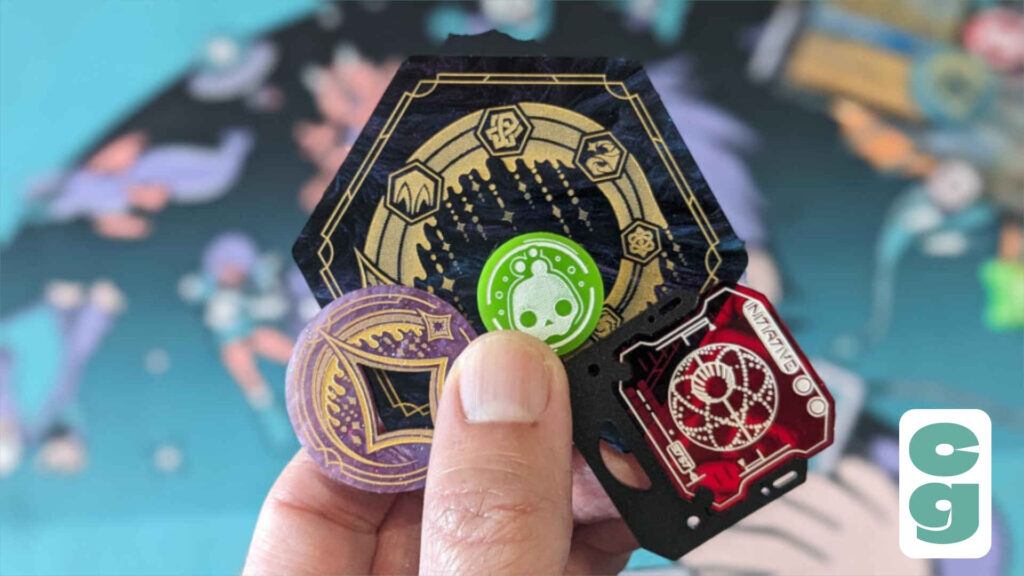
How about beautifully designed custom tokens? Get yourself a discount with our friends at Buy The Same Token!