
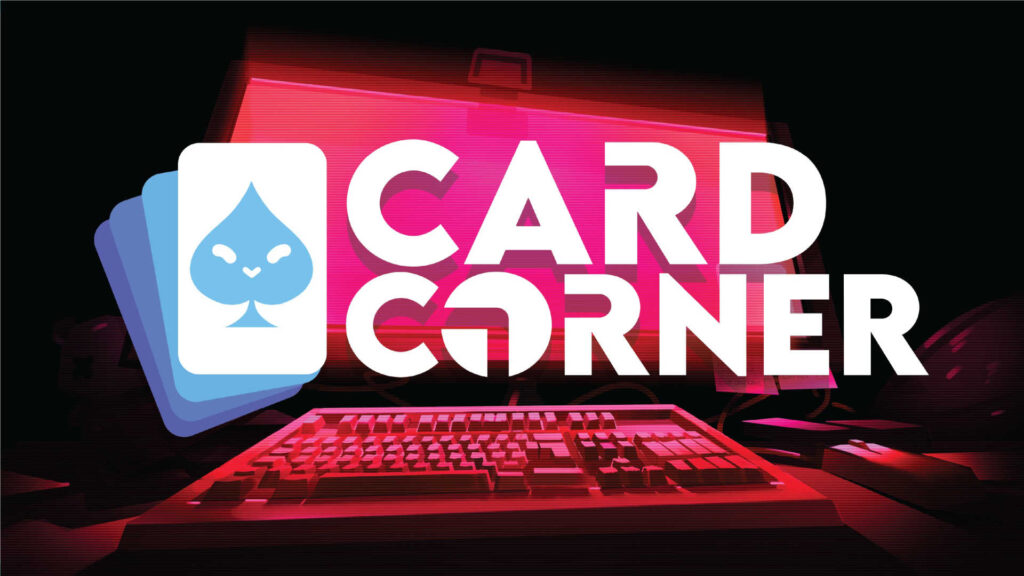
Since poker-based roguelike, Balatro, was released, numerous games have emerged which try to tap into its almost unbelievable addictiveness. Few have come anywhere close to just how compelling Balatro is, however, but Card Corner does an admirably good job of it, with far less interaction involved. Confused? Let’s clear things up, as we check out Card Corner!
What Is Card Corner?
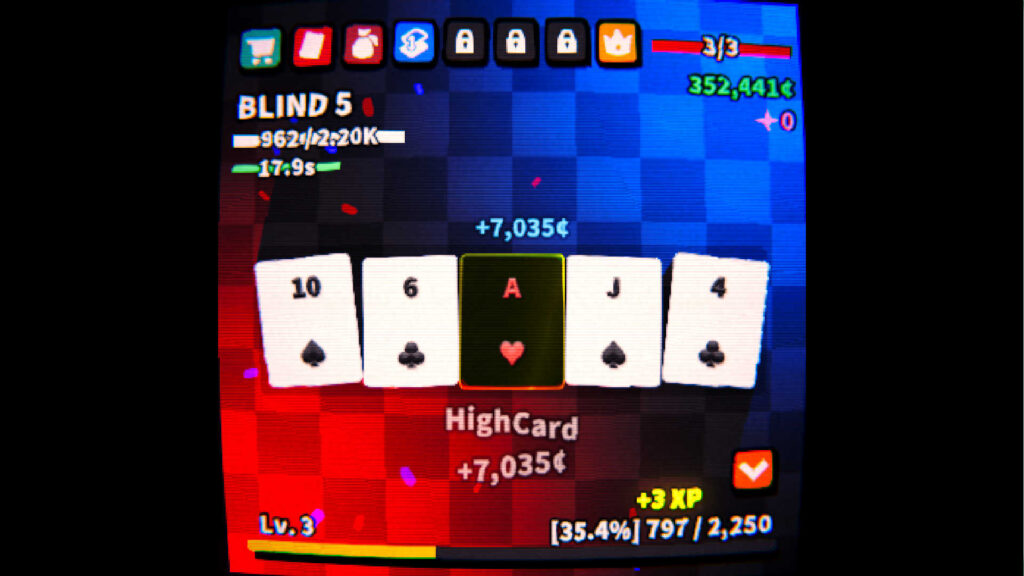
A poker-based roguelike game, Card Corner can’t help having at least some similarities with Balatro. However, in practice you’ll notice that it’s pretty different to play. In that you don’t really have to play it at all. Or at least, you can play it in your own time, and at your own pace, being as involved, or not, as you want.
That’s because Card Corner is an idle game; as its name suggests, it’ll happily sit in the corner of your desktop and play itself, from the moment you begin a new game, or continue when you return to your computer. Five cards deal themselves, with points scored based on the hand created. This is automatic, and requires no input at all.
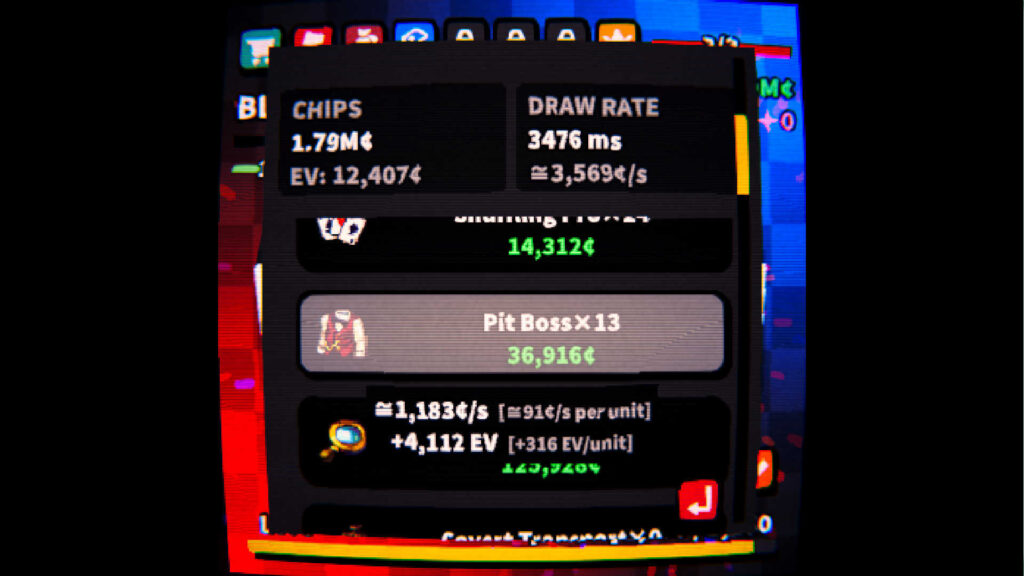
However, in order for you to outpace the round timer and reach higher rounds, you’ll need to buy new items which improve your base score. Or wait for random loot to drop, which give bonuses to certain hands or suits. You can add and remove cards from your deck too, in order to improve it as you see fit.
XP is earned from each successful hand, and this enables you to level up, unlocking further options, loot slots and more besides as you progress.
It’s also possible to ascend; doing this will reset your run, removing all of your accrued points and levels. It’ll also give you “Ascendium”, which can be spent on powerful upgrades which remain in place even after ascending. You’ll soon see your points and XP reaching ridiculously high levels, even if you decide to ascend and reset!
Is Card Corner Fun to Play?
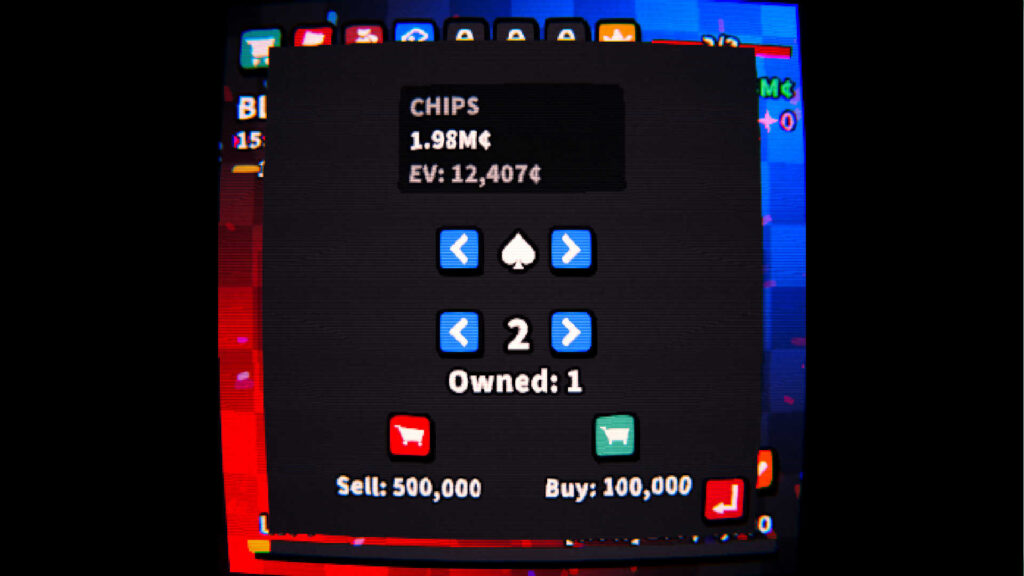
There’s a weirdly impenetrable feel to Card Corner, which drops you in at the deep end and explains very little of what its various elements, including the “buildings” in its shop, mean. There’s a lot of abbreviations used, and many aren’t easy to decipher. This does make the initial progress a little frustrating, though it gets pretty compelling soon enough.
There is a tips section in the options, but I found that quite poorly organized and badly thought out for beginners. Another issue I found is the quickly spiralling cost of adding and removing cards, which seems to massively restrict the deckbuilding aspect of the game. Loot spawns far quicker than you can make use of it. Far too few loot slots are available for far too long. These take a ridiculous amount of time to unlock.
Yet the presentation is stellar. Visually, Card Corner has a surprisingly excellent style of lighting and particle effects, for example. Then there’s the music and sound effects; the music is, frankly, incredible. It truly elevates what can be an oddly paced, occasionally unsatisfying experience.
All that said, Card Corner is designed to just sit on your screen and take care of itself, so perhaps I’m missing the point a bit with my complaints about its impenetrability and pacing. Especially as Card Corner is cheap, costing little more than the price of a cup of coffee. With that soundtrack emanating from your speakers as you work or browse online, and occasionally glancing at the bottom of your screen, Card Corner can be ignored or engaged with in your own time.
The Card Gamer Verdict
Though hampered by some mechanics that aren’t clear even after prolonged play, Card Corner can just be left to do its own thing.
That said, in terms of presentation, Card Corner really punches above its weight.
Overall, Card Corner is a fun diversion, but it is a shame that it can be frustrating to actually “play” rather than observe.
Card Corner is available on Steam now: